

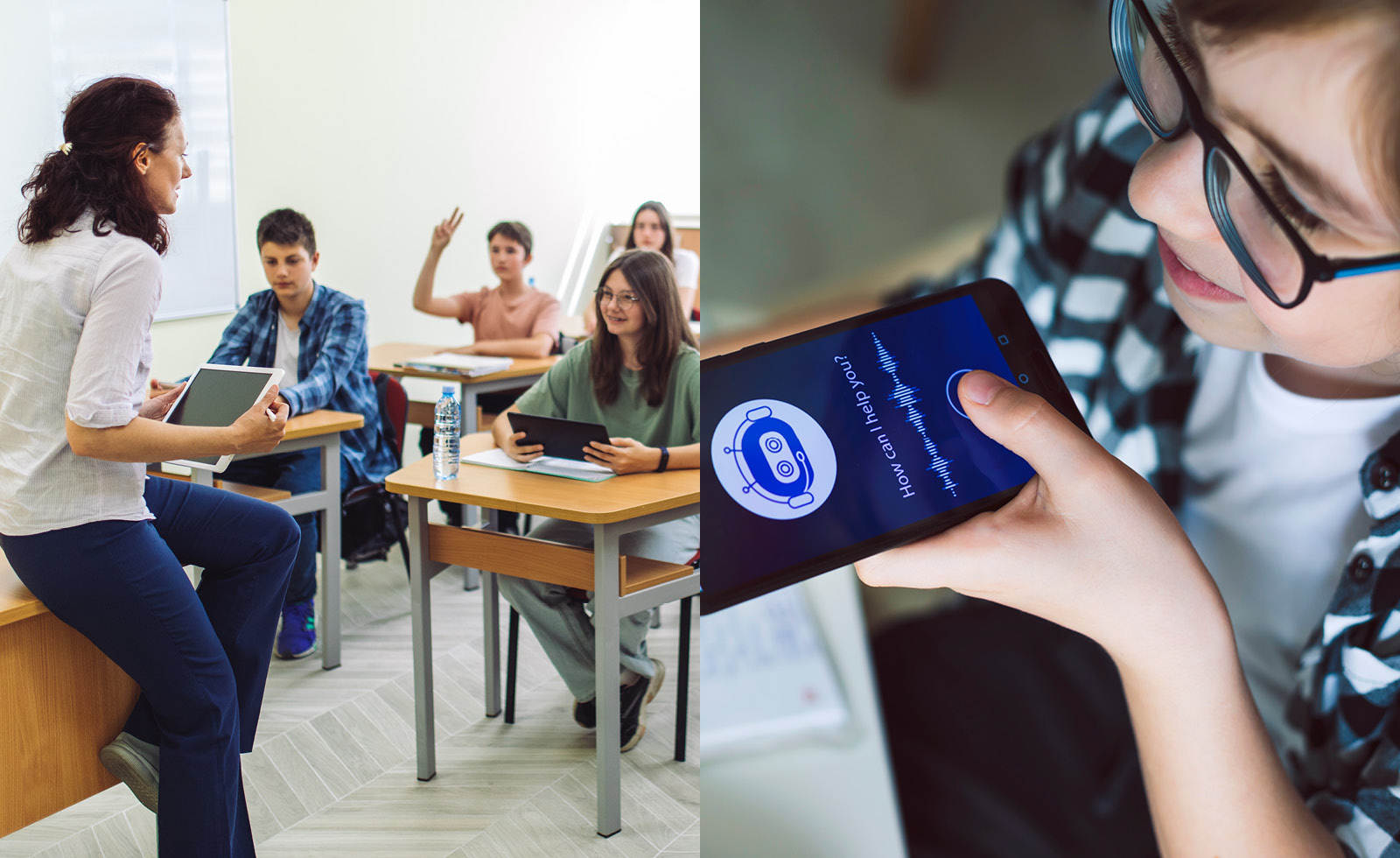
The use of artificial intelligence (AI) is expanding rapidly, with increasing adoption among youth.1 AI offers new efficiencies and opportunities, yet its deeper integration into daily life requires careful consideration to ensure that AI tools are safe, especially for adolescents (generally considered to be between ages 10 and 25).2,3
AI is embedded in many types of applications and programs, ranging from more subtle uses (e.g., predictive text, autocomplete, shopping recommendations) to a more substantial presence (e.g., chatbots, job application reviews, warning systems). We refer to “generative AI” as including applications that can generate humanlike text, create photorealistic images, produce lifelike audio, and create realistic videos, all of which can influence young people’s perceptions and behaviors.4 We refer to “interactive AI” as platforms or tools that facilitate human-AI interactions, such as real-time conversations, personalized learning experiences, relationships, and tailored content recommendations.5 Both interactive and generative AI have the potential to shape young people’s development, interactions, and understanding of the world. Furthermore, AI is increasingly being used to automate decision-making (e.g., school admissions, medical diagnosis, automated grading) that can have long-lasting consequences for youth.
Ensuring adolescents’ safety and well-being requires action from numerous stakeholders, including but not limited to parents, caregivers, educators, policymakers, technology industry professionals, adolescents, and platforms that develop and/or host AI tools. This report offers a series of recommendations, some of which may be enacted immediately by parents/caregivers, youth, or educators. Others will require more substantial change by platforms, policymakers, and/or technology professionals. All should review the recommendations below and consider how best to address each.
Background and considerations
Previously, APA offered a health advisory on adolescent use of social media, synthesizing empirical research on associations with youth psychological development. This advisory included evidence-based recommendations to maximize benefits and minimize risks to youth.
Building on that work, this report addresses the emerging use of AI and its associations with youth well-being. While AI is being used in new and pervasive ways, research on its impacts is still developing. As in prior APA reports on social media usage and healthy video content recommendations for youth, the recommendations below are based on the scientific evidence to date and the following considerations:
- The effects of AI on adolescent development are nuanced and complex; AI is not all “good” or “bad.” Consideration of the impacts of AI should include factors such as the specific application of AI, design features of applications, data uses to train AI systems, and the context of the use of these technologies;
- Adolescence is a long developmental period, and age is not a foolproof marker for maturity or psychological competence, meaning that two adolescents of the same age are unlikely to be at the same level of maturity or development;6
- Adolescence is a critical period for brain development, when adolescents are experiencing greater developmental changes than any other period in life besides infancy,7,8 making additional safeguards especially important for this group;
- Different adolescents may react to the same content in very different ways; individual differences—such as temperament, neurodiversity, exposure to stress or violence, social isolation, traumatic experiences, mental health, age, and/or exposure to socioeconomic or structural disadvantage can all affect adolescents’ responses to content or online experiences;9,10
- Biases, including discrimination, are often present in AI output because of the use of unrepresentative training data, the lack of diversity of input in product testing and development, and the simple fact that computer programming has been designed by adult humans;11,12
- In addition to the use of AI by adolescents’ peers, the use of AI by adults (e.g., parents and teachers) can be highly influential in adolescents’ own attitudes and practices around AI; it is critical that adults model healthy behavior and critical thinking for adolescents.13
- We urge all stakeholders to ensure youth safety is considered relatively early in the evolution of AI. It is critical that we do not repeat the same harmful mistakes that were made with social media. This is particularly important for at least two reasons. First, unlike social media use, adolescents may be unaware when they are using AI or AI-assisted technology (see below) and may not realize how AI is impacting their lives.14,15 Second, AI has made the process of discerning truth even more difficult. Although misinformation has always been disseminated on the internet, AI can produce inaccurate information in new ways that have the effect of making many users believe the information is true, requiring adolescents to be especially vigilant.16
Ensure healthy boundaries with simulated human relationships
AI systems designed to simulate human relationships, particularly those presented within interactive AI platforms as companions or experts (e.g., chatbots designed to provide social or mental health support), must incorporate safeguards to mitigate potential harm to youth and enhance well-being. This is critical for two reasons.
First, adolescents are less likely than adults to question the accuracy and intent of information offered by a bot as compared with a human. For instance, adolescents may struggle to distinguish between the simulated empathy of an AI chatbot or companion and genuine human understanding.17 They may also be unaware of the persuasive intent underlying an AI system’s advice or bias.18 Consequently, youth are likely to have heightened trust in, and susceptibility to, influence from AI-generated characters, particularly those that present themselves as friends or mentors.19,20,21
Second, adolescents’ relationships with AI entities also may displace or interfere with the development of healthy real-world relationships, underscoring the need for additional research on adolescents’ AI use over time. While these technologies may offer companionship and social support, particularly among youth that otherwise have difficulties forming healthy relationships with humans who have similar interests or identities,22 they also carry the risk of creating unhealthy dependencies and blurring the lines between human and artificial interaction. Early research indicates that strong attachments to AI-generated characters may contribute to struggles with learning social skills and developing emotional connections. They may also negatively affect adolescents’ ability to form and maintain real-world relationship.23,24 Accordingly, we present the following recommendations:
- AI developers should prioritize features that prevent exploitation, manipulation, and the erosion of real-world relationships, including those with parents and caregivers.25 This may include building in regular notifications and reminders that adolescents are interacting with a bot, or AI tools could offer resources and suggestions to encourage adolescents to seek human interactions, especially if adolescents indicate they are experiencing significant challenges, such as suicidality or threats of abuse.
- Regulatory measures should ensure that AI systems designed for adolescents protect the mental and emotional health of adolescents, ensuring that AI technologies are safe and beneficial.
- Educators and parents can inoculate youth against potential harms of relationships with AI characters through literacy programs that a) explain that not all AI-generated content is accurate, b) discuss the intent of some AI bots, and c) educate youth about potential indicators of misinformation or marketing goals that may be underlying human-bot interactions. In a landscape that includes more online interactions among youth than ever before, it is critical that parents and educators provide adolescents with opportunities to develop and sustain supportive, mutual, happy relationships with other humans.

AI for adults should differ from AI for adolescents
AI systems designed for, or foreseeably accessed by, adolescents must be developed with explicit consideration of the competencies, abilities, and vulnerabilities of adolescence. For instance, developers of these systems should take steps to avoid exploiting sensitivities of young people, such as the heightened social sensitivity and underdeveloped impulse control that may occur throughout early- and mid-adolescence. AI experiences also should be appropriate for adolescents’ level of psychological maturity (e.g., self-regulation skills, intellectual development, understanding of risks) and should incorporate age-appropriate safeguards such as being trained on age-appropriate data, protective defaults, and design choices that differ from those intended for adult users.
AI developers and platform designers may address these issues through:
- Age-appropriate defaults: Privacy settings, interaction limits, and age-appropriate content should be set to the most protective levels by default for young users.
- Transparency and explainability: To the extent possible, the workings of AI systems should be presented in a way that is understandable to young users and empowers them to make informed choices about what they put into and get out of AI systems. Certain features should allow for opting in and out. Regular reminders that the user is interacting with nonhuman, AI-based technology should also be included.
- Reduced persuasive design: Features designed to maximize engagement (e.g., gamification, personalized responses, manipulative notifications) should be minimized or eliminated in AI systems intended for or easily accessible by youth.
- Human oversight and support: Mechanisms for human intervention and support should be readily available, allowing young users to report concerns, seek help, and disengage from potentially harmful interactions. For example, a user who expresses that they are suicidal could be linked to the 988 Suicide and Crisis Lifeline and other relevant resources.
- Rigorous testing: AI systems should undergo thorough and continuous testing with diverse groups of young users to identify and mitigate potential unintended consequences and negative impacts before widespread release. This might be accomplished by ensuring that advisory boards to AI companies include scientists, youth, ethicists, health professionals, and other stakeholders who are primarily charged with the protection of adolescents.

Encourage uses of AI that can promote healthy development
AI tools can significantly enhance student learning and development. For learning, AI can assist in brainstorming, creating, organizing, summarizing, and synthesizing information, and offering resources and solutions for challenging problems.26 Research indicates that these capabilities make it easier for students to understand and retain key concepts. In terms of cognitive development, AI promotes growth through advanced questioning techniques that can stimulate critical thinking, scaffolding that provides step-by-step guidance, and adaptive learning that delivers personalized feedback.27 If teachers have the skills to leverage AI in appropriate ways and ensure that the use of AI does not override processes necessary for students to learn, these tools can encourage students to more deeply explore concepts and progressive skill-building as well as help with the development of complex interpersonal skills.28
However, it’s crucial for students to be aware of AI’s limitations. AI-generated summaries may not always be accurate, and students must not become overly dependent on AI, which could impede developing their own knowledge and skills.29,30 Additionally, AI may miss subtle verbal and nonverbal cues that convey important emphases and messages. To maximize AI’s benefits, students should actively question and challenge AI-generated content and use AI tools to supplement rather than replace existing strategies and pedagogical approaches. This necessitates engaging in active learning, where students interact with information and construct their own knowledge, which research indicates leads to better academic outcomes.31

Limit access to and engagement with harmful and inaccurate content
As noted in APA’s recent video content recommendations, exposure to harmful content is associated with increased risk of anxiety, depression, and other mental health problems.32,33,34 Adolescents exposed to violence and graphic content may become desensitized to it or traumatized by it,35 contributing to harmful behaviors and attitudes being normalized for young people who are routinely exposed to this content.36
Research also suggests that repeated exposure to misinformation makes it more likely to be believed and contributes to its spreading.37,38 This repeated exposure may hinder analytic thinking skills and make adolescents even more susceptible to misinformation.39,40
- Developers of AI systems accessible to youth should use robust protections to prevent and mitigate youth’s exposure to harmful content. This content includes but is not limited to material that is inappropriate for their age, dangerous, illegal, biased and/or discriminatory, or may trigger similar behavior among vulnerable youth.
- User reporting and feedback systems should be in place to allow adolescents and caregivers to customize content restrictions based on their specific needs and sensitivities.
- Educational resources should be provided to help adolescents and their caregivers recognize and avoid harmful content and to understand the associated risks of engaging with AI tools.
- Collaboration with mental health professionals, educators, and psychologists is essential to ensure content filtering mechanisms are effective and appropriate.

Accuracy of health information is especially important
Accurate health information is especially crucial for adolescents because they are in a critical stage of physical and psychological development. Data show that young people often seek out health information online.41 Misinformation or incomplete information can lead to harmful behaviors, misdiagnoses, and delayed or incorrect treatment, among other negative possibilities, which can have serious impacts on well-being.42,43,44
- AI systems that provide health-related information or recommendations to youth, including those using generative or interactive AI, should ensure the accuracy and reliability of health content and/or provide explicit and repeated warnings that the information may not be scientifically accurate.45 This includes awareness that information from publications that purport to offer empirically based information or from self-identified authoritative sources vary significantly in quality and accuracy and should not be weighted equally in the training of AI models.46,47
- AI systems should include clear disclaimers to prominently and clearly warn young users that AI-generated information is not a substitute for professional health advice, diagnosis, or treatment, and that relying on unverified AI-generated health information is ill-advised.
- AI platforms should provide resources and reminders to adolescents to contact a human (e.g., an educator, school counselor, pediatrician, or other authority) or validated resource to verify the information obtained online and to ensure proper next steps.
- Parents and educators should continually remind adolescents that the content they find online and from AI may not be accurate and may actually be intended to be persuasive and could be harmful.

Protect adolescents’ data privacy
AI systems that collect or process data from adolescents must prioritize their privacy and well-being over commercial profit.48,49,50 This requires maximizing transparency and user control and minimizing potential harm associated with data collection, use, misuse, and manipulation. Platforms should limit the use of adolescents’ data for targeted advertising, personalized marketing that exploits their immature brain development, the sale of user data to third parties, or any purpose beyond that for which it was explicitly collected.
Transparency in data collection and usage, presented in a clear, comprehensible, and user-centered manner, along with obtaining informed consent from users and caregivers, is essential. Furthermore, recognize that data collected by AI, including biometric and neural information from emerging technologies, can provide insights into mental states and cognitive processes. AI systems must safeguard this sensitive information and uphold adolescents’ basic right to privacy
Protect likenesses of youth
The misuse of adolescents’ likenesses (e.g., images, voices) can lead to the creation and dissemination of harmful content, including cyberhate, cyberbullying, and sexually abusive material such as “deepfakes” and nonconsensual explicit images.51,52 These practices can have severe psychological and emotional impacts on young individuals, including increased risk of depression, anxiety, and suicide-related behaviors.53,54,55
- AI platforms and systems must implement stringent restrictions on the use of youths’ likenesses to prevent the creation and dissemination of harmful content. These restrictions must encompass both the input and output of content into AI platforms. Mechanisms for monitoring compliance and enforcing these restrictions should be established to ensure adherence.
- Parents, caregivers, and educators should teach youth the dangers of posting images online and strategies to use when confronting images of their peers or themselves that may be disturbing, inappropriate, or illegal.
- Educators should consider policies to manage the creation and proliferation of hateful AI-generated content in schools.

Empower parents and caregivers
Parents and caregivers play a vital role in guiding and protecting adolescents as they navigate AI technologies.56 However, they often have limited time or capacity to learn about the age appropriateness, safety, prevalence, and potential risks and benefits of these technologies.
- Industry stakeholders, policymakers, educators, psychologists, and other health professionals should collaborate to develop and implement readily accessible, user-friendly resources that provide clear guidance on the age appropriateness, safety, and potential risks and benefits of AI technologies accessible to youth, as well as literacy on how best to have a conversation with them about AI. These resources should extend beyond simple ratings and incorporate detailed explanations of data collection practices, algorithmic biases, and the potential for manipulative or addictive design elements.
- Customizable and accessible parental control settings and interactive tutorials needed to identify and mitigate online risks should be included. These resources should be analogous to existing systems for movies, video games, and music, offering a concise and easily understandable way for adults to make informed decisions about their children’s AI interactions without requiring extensive individual research. Crucially, these materials must be regularly updated to reflect the rapidly evolving AI landscape. These resources should be paired with default settings and parental tools that empower caregivers to easily set parameters for their adolescent using AI-based technologies and to maintain visibility into potentially harmful interactions.

Implement comprehensive AI literacy education
AI literacy is essential for adolescents and those who support and educate them to navigate the increasingly AI-driven world.57,58 Understanding AI’s workings, benefits, limitations, and risks is crucial for making informed decisions and using AI responsibly.59,60,61 This education must equip young people with the knowledge and skills to understand what AI is, how it works, its potential benefits and limitations, privacy concerns around personal data, and the risks of overreliance. Crucially, this education must include a specific focus on algorithmic bias: how biases can be embedded in AI systems due to skewed training data, flawed model design, or unrepresentative development and testing teams.62,63,64 Young users should understand how these biases can lead to incomplete or inaccurate information that perpetuates myths, untruths, and/or antiquated beliefs. These biases can even lead to discriminatory or inequitable information, particularly regarding vulnerable groups. Education should include tips on how to critically evaluate AI-generated outputs and interactions to identify and challenge potential bias.65 The overall goal is to empower youth to use AI safely, responsibly, critically, and ethically. A multipronged, multistakeholder approach is necessary.66
- Educators should integrate AI literacy into core curricula, spanning computer science, social studies, and ethics courses; provide teacher training on AI concepts, algorithmic bias, and responsible AI use; offer hands-on learning experiences with AI tools and platforms, emphasizing critical evaluation of AI-generated content; and facilitate discussions on the ethical implications of AI, including privacy, data security, transparency, possible bias, and potential societal impacts.67,68
- Policymakers should develop national- and state-level guidelines for AI literacy education, allocate funding for research and development of AI literacy resources and teacher training programs, enact legislation that mandates age-appropriate AI literacy education in schools, and promote public awareness campaigns about AI’s potential risks and benefits.69
- Technology developers should create transparent and accessible explanations of AI algorithms and data collection practices, develop educational tools and resources to help users understand how AI systems work, including explanations of algorithmic bias, collaborate with educators to develop age-appropriate AI literacy curricula, incorporate bias detection and mitigation tools into AI platforms, and provide simple and easy-to-use reporting mechanisms for users to report suspected bias.

Prioritize and fund rigorous scientific investigation of AI’s impact on adolescent development
To comprehensively understand the complex interplay between AI technologies and adolescent well-being, a significant and sustained investment in scientific research is imperative. This necessitates:
- Longitudinal studies: Funding for extended longitudinal research to track the developmental trajectories of adolescents interacting with AI over time;
- Research designs that enable the identification of causal relationships and long-term effects;
- Diverse population studies: Expanded research to include younger children and marginalized and vulnerable populations, ensuring that findings are generalizable while addressing the unique vulnerabilities of certain groups;
- Data accessibility and transparency: Development and implementation of mechanisms for independent scientists to access relevant data, including data held by technology companies, to facilitate thorough and unbiased examination of the associations between AI use and adolescent development. This includes data pertaining to algorithmic functions, content moderation, and user engagement metrics.
- Interdisciplinary collaboration: Fostering collaboration between psychologists, neuroscientists, computer scientists, ethicists, educators, public health experts, youth, and parents/caregivers to develop a comprehensive understanding of the multifaceted impacts of AI.

Members (listed alphabetically)
Mary Alvord, PhD, psychologist, founder of Alvord, Baker & Associates, LLC, and Resilience Across Borders, Inc.
Dawn Bounds, PhD, PMHNP-BC, FAAN, associate professor, Sue and Bill Gross School of Nursing, University of California, Irvine
Linda Charmaraman, PhD, founder/director of Youth, Media, & Wellbeing research lab; senior research scientist, Wellesley Centers for Women, Wellesley College
Sophia Choukas-Bradley, PhD, associate professor of psychology, University of Pittsburgh
Dorothy Espelage, PhD, William C. Friday Distinguished Professor of Education, University of North Carolina at Chapel Hill
Ellen Fitzsimmons-Craft, PhD, associate professor of psychological and brain science and psychiatry, Washington University in St. Louis
Joshua A. Goodman, PhD, associate professor, Department of Psychology, Southern Oregon University
Jessica Hamilton, PhD, assistant professor, Department of Psychology, Rutgers University–New Brunswick
Mary Ann McCabe, PhD, ABPP, member-at-large, Board of Directors, American Psychological Association; independent clinical practice
Jacqueline Nesi, PhD, assistant professor, Department of Psychiatry and Human Behavior, Alpert Medical School of Brown University
Grant J. Rich, PhD, past president, Society for Media Psychology and Technology; senior contributing faculty, Walden University, Juneau, Alaska
Brendesha Tynes, PhD, professor of education and psychology and director of the Center for Empowered Learning and Development with Technology, University of Southern California
S. Craig Watkins, PhD, Ernest A. Sharpe Centennial Professor, The University of Texas at Austin
APA staff leads
Mitchell J. Prinstein, PhD, ABPP, chief of psychology, American Psychological Association; John Van Seters Distinguished Professor of Psychology and Neuroscience, University of North Carolina at Chapel Hill
Corbin Evans, JD, deputy chief of advocacy for science and technology
Ludmila Nunes, PhD, senior director for scientific knowledge and expertise
APA staff consultants
Nicole Barnes, PhD, senior director, child and adolescent learning and well-being
Tony Habash, chief business integration officer and chief information officer
Beth M. Schwartz, PhD, senior director, precollege and undergraduate psychology education
Dennis P. Stolle, JD, PhD, head of applied psychology
Lauren Sommers, JD, PhD, deputy chief of psychology in the public interest
Wendy R. Williams, PhD, senior director for graduate studies
Aaron Wood, head of product and content management, APA Publishing
Vaile Wright, PhD, senior director, health care innovation
Selected publications and resources
1 Hopelab, Common Sense Media, & The Center for Digital Thriving at Harvard Graduate School of Education. (2025). Teen and young adult perspectives on generative AI: Patterns of use, excitements, and concerns. Hopelab. https://hopelab.org/stories/teen-and-young-adult-perspectives-on-generative-ai
2 Orben, A., Przybylski, A. K., Blakemore, S.-J., & Kievit, R. A. (2022). Windows of developmental sensitivity to social media. Nature Communications, 13(1), Article 1649. https://doi.org/10.1038/s41467-022-29296-3
3 Crone, E. A., & Konijn, E. A. (2018). Media use and brain development during adolescence. Nature Communications, 9, 588. https://doi.org/10.1038/s41467-018-03126-x
4 Feuerriegel, S., Hartmann, J., Janiesch, C. (2024). Generative AI. Business & Information Systems Engineering, 66(1), 111–126. https://doi.org/10.1007/s12599-023-00834-7
5 Raees, M., Meijerink, I., Lykourentzou, I., Khan, V.-J., & Papangelis, K. (2024). From explainable to interactive AI: A literature review on current trends in human-AI interaction. International Journal of Human-Computer Studies, 172, Article 103234. https://doi.org/10.1016/j.ijhcs.2024.103301opens in new window
6 Kipke, M. D. (Ed.). (1999). Adolescent development and the biology of puberty: Summary of a workshop on new research. National Academies Press.
7 Somerville, L. H., & Casey, B. J. (2010). Developmental neurobiology of cognitive control and motivational systems. Current Opinion in Neurobiology, 20(2), 236–241. https://doi.org/10.1016/j.conb.2010.01.006
8 Mills, K. L., Lalonde, F., Clasen, L. S., Giedd, J. N., & Blakemore, S.-J. (2012). Developmental changes in the structure of the social brain in late childhood and adolescence. Social Cognitive and Affective Neuroscience, 9(1), 123–131. https://doi.org/10.1093/scan/nss113
9 Valkenburg, P. M., & Peter, J. (2013). The differential susceptibility to media effects model. Journal of Communication, 63(2), 221–243. https://doi.org/10.1111/jcom.12024
10 Kardova, N., Smahel, D., Machackova, H., & Subrahmanyam, K. (2021). Who is exposed to harmful content? The role of risk and protective factors among Czech, Finnish, and Spanish adolescents. Journal of Youth and Adolescence, 50(12), 2294–2310. doi: 10.1007/s10964-021-01422-2
11 Tay, L., Woo, S. E., Hickman, L., Booth, B. M., & D’Mello, S. (2022). A conceptual framework for investigating and mitigating machine-learning measurement bias (MLMB) in psychological assessment. Advances in Methods and Practices in Psychological Science, 5(1), 1–14. https://doi.org/10.1177/25152459211061337
12 Landers, R. N., & Behrend, T. S. (2023). Auditing the AI auditors: A framework for evaluating fairness and bias in high stakes AI predictive models. American Psychologist, 78(1), 36–49. https://doi.org/10.1037/amp0000972
13 Bandura, A. (1971). Social learning theory. General Learning Press.
14 White House Office of Science and Technology Policy. (2022). Blueprint for an AI Bill of Rights: Making automated systems work for the American people. The White House. https://bidenwhitehouse.archives.gov/wp-content/uploads/2022/10/Blueprint-for-an-AI-Bill-of-Rights.pdfopens in new window)
15 5Rights Foundation. (n.d.). Children & AI Design Code. 5Rights Foundation. https://5rightsfoundation.com/children-and-ai-code-of-conduct/#:~:text=Overview,children%20by%20design%20and%20default.
16 Garimella, K., & Chauchard, S. (2024). How prevalent is AI misinformation? What our studies in India show so far. Nature, 630, 32–34. https://doi.org/10.1038/d41586-024-01588-2
17 Boine, C. (2023, Winter). Emotional attachment to AI companions and European law. MIT Case Studies in Social and Ethical Responsibilities of Computing. https://doi.org/10.21428/2c646de5.db67ec7f
18 Van Der Hof, S., Lievens, E., Milkaite, I., Verdoodt, V., Hannema, T., & Liefaard, T. (2020). The child’s right to protection against economic exploitation in the digital world. The International Journal of Children’s Rights, 28(4), 833–859.https://doi.org/10.1163/15718182-28040003
19 Knoll, L. J., Magis-Weinberg, L., Speekenbrink, M., & Blakemore, S.-J. (2015). Social influence on risk perception during adolescence. Psychological Science, 26(5), 583–592. https://doi.org/10.1177/0956797615569578
20 Zaki, J., Schirmer, J., & Mitchell, J. P. (2011). Social influence modulates the neural computation of value. Psychological Science, 22(7), 894–900. https://doi.org/10.1177/0956797611411057
21 van Duijvenvoorde, A. C. K., Peters, S., Braams, B. R., & Crone, E. A. (2016). What motivates adolescents? Neural responses to rewards and their influence on adolescents’ risk taking, learning, and cognitive control. Neuroscience & Biobehavioral Reviews, 70, 135–147. https://doi.org/10.1016/j.neubiorev.2016.06.037opens in new window
22 Bragazzi, N., Crapanzano, A., Converti, M., Zerbetto, R., & Khamisy-Farah, R. (2023). The impact of generative conversational artificial intelligence on the lesbian, gay, bisexual, transgender, and queer community: Scoping review. Journal of Medical Internet Research, 25, Article e52091. https://doi.org/10.2196/52091
23 Zimmerman, A., Janhonen, J., & Beer, E. (2023). Human/AI relationships: Challenges, downsides, and impacts on human/human relationships. AI and Ethics, 4, 1555–1567.https://doi.org/10.1007/s43681-023-00348-8
24 Bragazzi, N., Crapanzano, A., Converti, M., Zerbetto, R., & Khamisy-Farah, R. (2023). The impact of generative conversational artificial intelligence on the lesbian, gay, bisexual, transgender, and queer community: Scoping review. Journal of Medical Internet Research, 25, e52091. https://doi.org/10.2196/52091
25 van Der Hof, S., Lievens, E., Milkaite, I., Verdoodt, V., Hannema, T., & Liefaard, T. (2020). The child’s right to protection against economic exploitation in the digital world. The International Journal of Children’s Rights, 28(4), 833–859.https://doi.org/10.1163/15718182-28040003
26 D’Mello, S. K., Biddy, Q., Breideband, T., Bush, J., Chang, M., Cortez, A., Flanigan, J., Foltz, P. W., Gorman, J. C., Hirshfield, L., Ko, M.-L. M., Krishnaswamy, N., Lieber, R., Martin, J., Palmer, M., Penuel, W. R., Philip, T., Puntambekar, S., Pustejovsky, J., Reitman, J. G., Sumner, T., Tissenbaum, M., Walker, L., &Whitehill, J.(2024). From learning optimization to learner flourishing: Reimagining AI in education at the Institute for Student-AI Teaming (iSAT). AI Magazine, 45(1), 61–68. https://doi.org/10.1002/aaai.12158
27 D’Mello, S. K., Duran, N., Michaels, A., & Stewart, A. E. B. (2024). Improving collaborative problem-solving skills via automated feedback and scaffolding: A quasi-experimental study with CPSCoach 2.0. User Modeling and User-Adapted Interaction, 34, 1087–1125. https://doi.org/10.1007/s11257-023-09387-6
28 Hsu, A., & Chaudhary, D. (2023). AI4PCR: Artificial intelligence for practicing conflict resolution. Computers in Human Behavior: Artificial Humans, 1(1), 100002. https://doi.org/10.1016/j.chbah.2023.100002
29 Gökçearslan, S., Tosun, C., & Erdemir, Z. G. (2024). Benefits, challenges, and methods of artificial intelligence (AI) chatbots in education: A systematic literature review. International Journal of Technology in Education, 7(1), 19–39. https://doi.org/10.46328/ijte.600
30 Macnamara, B. N., Berber, I., Çavuşoğlu, M. C., Krupinski, E. A., Nallapareddy, N., Nelson, N. E., Smith, P. J., Wilson-Delfosse, A. L., & Ray, S. (2024). Does using artificial intelligence assistance accelerate skill decay and hinder skill development without performers’ awareness? Cognitive Research: Principles and Implications, 9, Article 46. https://doi.org/10.1186/s41235-024-00572-8
31 Freeman, S., Eddy, S. L., McDonough, M., Smith, M. K., Okoroafor, N., Jordt, H., & Wenderoth, M. P. (2014). Active learning increases student performance in science, engineering, and mathematics. Proceedings of the National Academy of Sciences, 111(23), 8410–8415.https://doi.org/10.1073/pnas.1319030111
32 Livingstone, S., & Smith, P. (2014). Annual research review: Children and young people in the digital age: The nature and prevalence of risks, harmful effects, and risk and protective factors, for mobile and internet usage. Journal of Child Psychology and Psychiatry, 55(6), 635–654. doi: 10.1111/ jcpp.12197
33 Holman, E. A., Garfin, D. R., & Silver, R. C. (2013). Media’s role in broadcasting acute stress following the Boston Marathon bombings. PNAS, 111(1), 93–98. https://doi. org/10.1073/pnas.1316265110
34 Tynes, B. M., Willis, H. A., Stewart, A., & Hamilton, M. (2019). Race-related traumatic events online and mental health among adolescents of color. Journal of Adolescent Health, 65(3), 371–377. https://doi.org/10.1016/j.jadohealth.2019.03.006
35 Coyne. S. M. (2016). Effects of viewing relational aggression on television on aggressive behavior in adolescents: A three year longitudinal study. Developmental Psychology, 52(2), 284–295. https://doi.org/10.1037/dev0000068
36 Alfurayj, H. S., Hurtado, B. F., Lutfi, S. L., & Rana, T. A. (2024). Exploring bystander contagion in cyberbully detection: A systematic review. Journal of Ambient Intelligence and Humanized Computing, 1–17. https://doi.org/10.1007/s12652-024-04831-w
37 Fazio, L. K., Rand, D. G., & Pennycook, G. (2019). Repetition increases perceived truth equally for plausible and implausible statements. Psychonomic Bulletin & Review, 26, 1705–1710. https://doi.org/10.3758/s13423-019-01651-4
38 Unkelbach, C., Koch, A., Silva, R. R., & Garcia-Marques, T. (2019). Truth by repetition: Explanations and implications. Current Directions in Psychological Science, 28(3), 247–253. https://doi.org/10.1177/0963721419827854
39 Fazio, L. K. (2020). Repetition increases perceived truth even for known falsehoods. Collabra: Psychology, 6(1), 38. https://doi.org/10.1525/collabra.347
40 Ross, R. M., Rand, D. G., & Pennycook, G. (2021). Beyond “fake news”: Analytic thinking and the detection of false and hyperpartisan news headlines. Judgment and Decision Making, 16(2), 484–504. https://doi.org/10.1017/S1930297500008640
41 Herriman, Z., Tchen, H., & Cafferty, P. W. (2025). Could be better: Adolescent access to health information and care. European Journal of Pediatrics, 184, Article 7. https://doi.org/10.1007/s00431-024-05868-x
42 Gray, N., Klein, J., Noyce, P., Sesselberg, T., & Cantrill, J. (2005). The internet: A window on adolescent health literacy. Journal of Adolescent Health, 37(3), 243.e1-243.e7. https://doi. org/10.1016/J.JADOHEALTH.2004.08.023
43 Lee, E. E., Torous, J., De Choudhury, M., Depp, C. A., Graham, S. A., Kim, H. C., Kim, Y., Paulus, M. P., Palsson, O., Thompson, W. K., & Jeste, D. V. (2021). Artificial intelligence for mental health care: Clinical applications, barriers, facilitators, and artificial wisdom. Biological Psychiatry: Cognitive Neuroscience and Neuroimaging, 6(9), 856–864. https://doi.org/10.1016/j.bpsc.2021.02.001
44 Monteith, S., Glenn, T., Geddes, J. R., Whybrow, P. C., Achtyes, E., & Bauer, M. (2024). Artificial intelligence and increasing misinformation. The British Journal of Psychiatry, 224(2), 33–35. https://doi:10.1192/bjp.2023.136
45 Martel, C., & Rand, D. G. (2023). Misinformation warning labels are widely effective: A review of warning effects and their moderating features. Current Opinion in Psychology, 54, Article 101710. https://doi.org/10.1016/j.copsyc.2023.101710
46 Lee, P., Bubeck, S., & Petro, J. (2023). Benefits, limits, and risks of GPT-4 as an AI chatbot for medicine. New England Journal of Medicine, 388(13), 1233–1239. https://doi.org/10.1056/nejmsr2214184
47 Millenson, M. L., Baldwin, J. L., Zipperer, L., & Singh, H. (2018). Beyond Dr. Google: The evidence on consumer-facing digital tools for diagnosis. Diagnosis, 5(3), 95–105. https://doi.org/10.1515/dx-2018-0009
48 Fosch-Villaronga, E., Van Der Hof, S., Lutz, C., & Tamò-Larrieux, A. (2023). Toy story or children’s story? Putting children and their rights at the forefront of the artificial intelligence revolution. AI & Society, 38, 133–152.https://doi.org/10.1007/s00146-021-01295-w
49 Blease, C. (2024). Open AI meets open notes: Surveillance capitalism, patient privacy and online record access. Journal of Medical Ethics: Journal of the Institute of Medical Ethics, 50(2), 84–89.https://doi.org/10.1136/jme-2023-109574
50 Zhang, H., Nakamura, T., Isohara, T., & Sakurai, K. (2023). A review on machine unlearning. SN Computer Science, 4, Article 337. https://doi.org/10.1007/s42979-023-01767-4
51 Harris, K. R. (2021). Video on demand: What deepfakes do and how they harm. Synthese, 199, 13373–13391. https://doi.org/10.1007/s11229-021-03379-y
52 Thiel, D., Stroebel, M., & Portnoff, R. (2023). Generative ML and CSAM: Implications and mitigations. Stanford Digital Repository. Available at https://purl.stanford.edu/jv206yg3793. https://doi.org/10.25740/jv206yg3793
53 Christensen, L. S., Moritz, D., & Pearson, A. (2021). Psychological perspectives of virtual child sexual abuse material. Sexuality & Culture, 25, 1353–1365. https://doi.org/10.1007/s12119-021-09820-1
54 OECD. (2021). Children in the digital environment: Revised typology of risks. OECD Digital Economy Papers, (302). https://www.oecd-ilibrary.org/science-and-technology/children-in-the-digital-environment_9b8f222e-en
55 Lobe, B., Velicu, A., Staksrud, E., Chaudron, S., & Di Gioia, R. (2021). How children (10–18) experienced online risks during the Covid-19 lockdown—Spring 2020: Key findings from surveying families in 11 European countries. Publications Office of the European Union. https://doi.org/10.2760/562534
56 Lake, C., Snell, A., Gormley, C., Vinyard, I., Gillett, M., Soltis Anderson, K., O’Neil, E., Alles, D., Collins Coleman, E., & Robb, M. (2025). The state of kids and families in America 2025: Executive summary. Common Sense Media. Retrieved from https://www.commonsensemedia.org/sites/default/files/research/report/2025-common-sense-summit-report-web-2.pdfopens in new window
57 Chiu, T. K. F., Ahmad, Z., Ismailov, M., & Sanusi, I. T. (2024). What are artificial intelligence literacy and competency? A comprehensive framework to support them. Computers and Education Open, 6, Article 100171. https://doi.org/10.1016/j.caeo.2024.100171
58 Kong, S. C., Korte, S. M., Burton, S., Keskitalo, P., Turunen, T., Smith, D., Wang, L., Lee, J. C-K., & Beaton, M. C. (2024). Artificial Intelligence (AI) literacy: An argument for AI literacy in education. Innovations in Education and Teaching International, 62(2), 477–483. https://doi.org/10.1080/14703297.2024.2332744
59 Tiernan, P., Costello, E., Donlon, E., Parysz, M., & Scriney, M. (2023). Information and media literacy in the age of AI: Options for the future. Education Sciences, 13(9), 906. https://doi.org/10.3390/educsci13090906
60 Tynes, B., Stewart, A., Hamilton, M., & Willis, H. (2021). From Google searches to disinformation: Adolescent critical race digital literacy needs and skills. International Journal of Multicultural Education, 23(1), 110–130. https://doi.org/10.18251/ijme.v23i1.2463
61 Veldhuis, A., Lo, P. Y., Kenny, S., & Antle, A. N. (2025). Critical artificial intelligence literacy: A scoping review and framework synthesis. International Journal of Child-Computer Interaction, 43. https://doi.org/10.1016/j.ijcci.2024.100708
62 Schwartz, R., Vassilev, A., Greene, K., Perine, L., Burt, A., & Hall, P. (2022). Towards a standard for identifying and managing bias in artificial intelligence, NIST Special Publication 1270. National Institute of Standards and Technology. https://doi.org/10.6028/NIST.SP.1270
63 Kordzadeh, N., & Ghasemaghaei, M. (2021). Algorithmic bias: Review, synthesis, and future research directions. European Journal of Information Systems, 31(3), 388–409. https://doi.org/10.1080/0960085X.2021.1927212
64 Akter, S., McCarthy, G., Sajib, S., Michael, K., Dwivedi, Y. K., D’Ambra, J., & Shen, K. N. (2021). Algorithmic bias in data-driven innovation in the age of AI. International Journal of Information Management, 60, Article 102387. https://par.nsf.gov/servlets/purl/10344127
65 Landers, R. N., & Behrend, T. S. (2023). Auditing the AI auditors: A framework for evaluating fairness and bias in high stakes AI predictive models. American Psychologist, 78(1), 36–49. https://doi.org/10.1037/amp0000972
66 Allen, L. K., & Kendeou, P. (2023). ED-AI Lit: An interdisciplinary framework for AI literacy in education. Policy Insights from the Behavioral and Brain Sciences, 11(1), 3–10. https://doi.org/10.1177/23727322231220339
67 Southworth, J., Migliaccio, K., Glover, J., Glover, J., Reed, D., McCarty, C., Brendemuhl, J., & Thomas, A. (2023). Developing a model for AI across the curriculum: Transforming the higher education landscape via innovation in AI literacy. Computers and Education: Artificial Intelligence, 4, Article 100127. https://doi.org/10.1016/j.caeai.2023.100127
68 Yim, I. H. Y. (2024). A critical review of teaching and learning artificial intelligence (AI) literacy: Developing an intelligence-based AI literacy framework for primary school education. Computers and Education: Artificial Intelligence, 7, Article 100319. https://doi.org/10.1016/j.caeai.2024.100319
69 Allen, L. K., & Kendeou, P. (2023). ED-AI Lit: An interdisciplinary framework for AI literacy in education. Policy Insights from the Behavioral and Brain Sciences, 11(1), 3–10. https://doi.org/10.1177/23727322231220339