

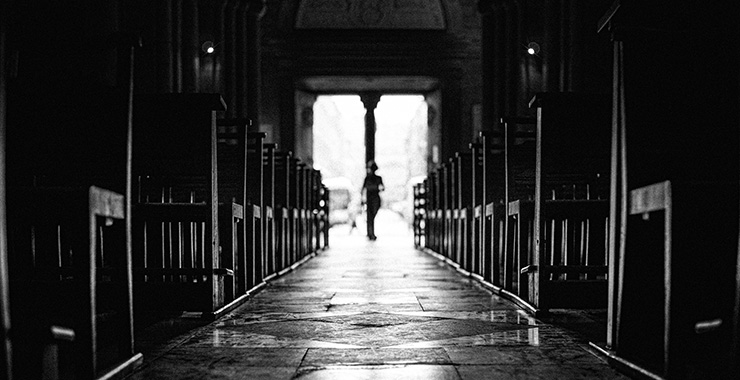
While previous research has shown a steep decline in religion in America, more recent surveys show the decline is leveling off. Still, according to a February 2025 Pew Research Study, 35% of U.S. adults have switched or left religion since childhood, leading to an increase in the religiously unaffiliatedopens in new window. As a result, many therapists find themselves helping patients to rebuild lives outside of a religious tradition.
The 2025 Pew study shows that after rising for decades, the number of religiously unaffiliated has at least temporarily stabilized. A 2021 Gallup poll found that since 1973, the percentage of Americans who say they have no religion had increased from 5% to 22%. The percentage of Americans who say they’re members of a church, mosque, or synagogue fell from 70% in 1999 to just 45% in 2023. This steep decline, according to Gallup, includes people of all ages, genders, and ethnicities.
For many, religion provides an important sense of meaning, belonging, and community, which can contribute positively to mental health and well-being. Some psychological research has associated religious practices with positive mental health outcomes and high scores on scales assessing self-esteem, self-efficacy, optimism, and hope (Levin, J., International Journal of Applied Psychoanalytic Studies, Vol. 7, No. 2, 2010opens in new window).
Yet, for some, religion has the opposite effect. Often, “religious dones,” or individuals departing from religion, choose to leave after experiencing mistreatment or abuse in the church or in the name of religion. Others cite a kind of cognitive dissonance as reason for leaving. “There can be a mismatch between a person’s identity or values and the values of their church,” said Daryl Van Tongeren, PhD, a professor of psychology at Hope College in Holland, Michigan, and author of Done: How to Flourish After Leaving Religion.
For example, a person who just received a cancer diagnosis may find their church’s view of suffering doesn’t make sense anymore. Or a person who finds a meaningful bond with a same-sex partner may leave if their church doctrine or fellow congregants discourage the union. The recent political climate may make these differences feel more pronounced, Van Tongeren said, which could be contributing to the recent uptick in religious dones. Cultural emphases on mental health and authenticity among younger generations could also play a role, along with the proliferation of social media, which may make leaving religion less isolating.
It can feel empowering to step away from religion, but rebuilding life after faith isn’t always easy. Religions with strict doctrines encourage members to socialize, work with, and marry other members, which can leave little room to include people outside their faith. When religious environments and doctrines cause harm, people often require a period of healing, said Marlene Winell, PhD, a clinical psychologist in Massachusetts who specializes in religious trauma. Post-religious people eventually form new beliefs about themselves and the world, but this can take time. “Religion has played a significant role in human life throughout history, and when people walk away from it, they often feel a sense of emptiness that needs to be filled,” said Van Tongeren.
One of the most difficult aspects is learning how to view oneself as a “good” person separate from religion. In fact, research shows that most people believe that faith is key to morality. But research also shows that religiosity does not equate to prosocial behavior, especially toward outsiders (Shariff, A. F., et al., Trends in Cognitive Sciences, Vol. 18, No. 9, 2014opens in new window).
Leaving can be even more costly for those who participated in a fundamentalist religion. “For some people, religion defines their identity, values, purpose, and behavior, and many of them are lacking important information about how to function in a different world context,” said Winell.
Some psychologists—many of whom are formerly religious themselves—specialize in spiritual reconstruction, or helping people build meaningful lives after leaving religion, and are stepping in to help people recover as they unlearn potentially harmful ways of thinking, reconstruct new beliefs, and find a renewed sense of purpose. On the following pages, read about the ways they’re supporting religious dones.